Climate Data for Latitude 52.25 Longitude 12.25

Köppen climate classification: Cfb (Climate: warm temperate; Precipitation: fully humid; Temperature: warm summer)
 

Locations

Download
Buckau und Nebenfließe
Flämingbuchen
Gränert
Große Freiheit bei Plaue
Pelze
Riembach
Schlamau
Verlorenwasserbach
Vogelschutzgebiet Altengrabower Heide
Vogelschutzgebiet Fiener Bruch

Averages (English) Metric

TypeUnitsJanFebMarAprMayJunJulAugSepOctNovDecPeriod
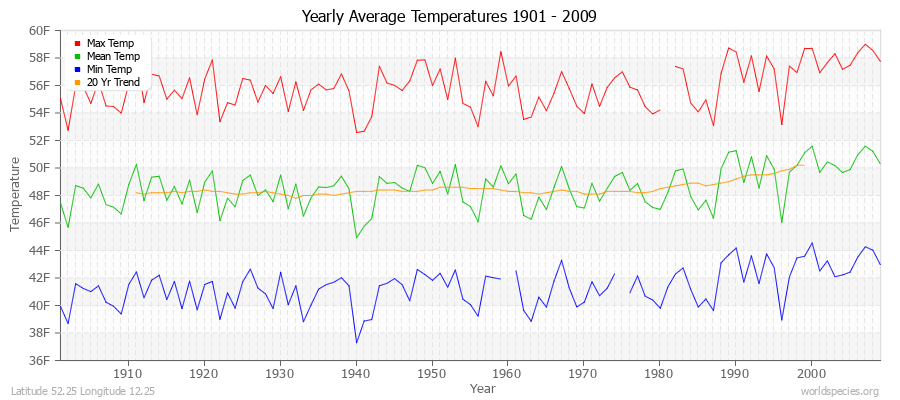
Min Temp27.428.332.839.046.852.756.255.349.742.435.730.0107 years
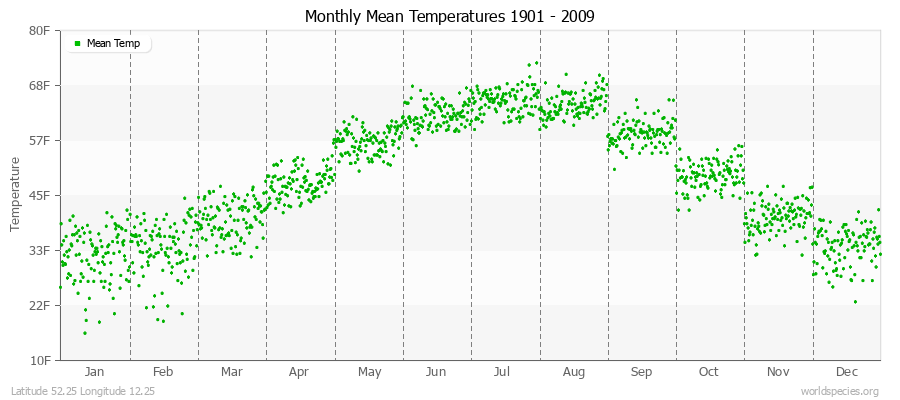
Mean Temp32.233.839.947.556.361.965.164.358.249.340.534.2109 years
Max Temp37.039.347.056.265.971.374.273.366.756.245.238.4108 years
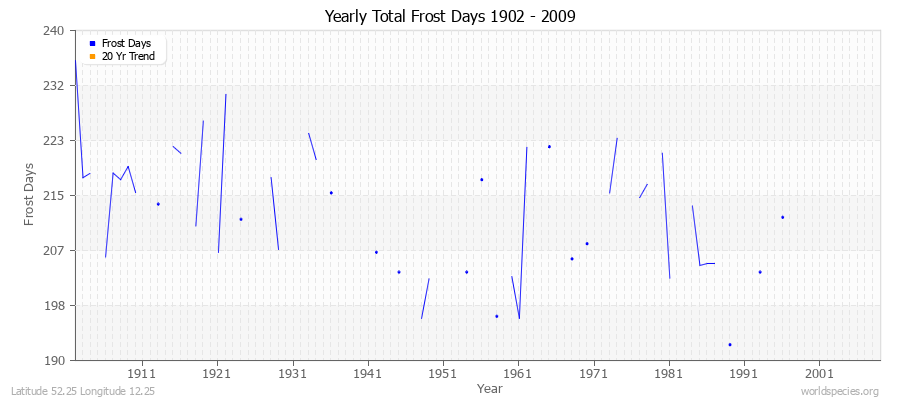
FrostDays31.028.331.020.76.74.63.44.15.017.729.131.047 years
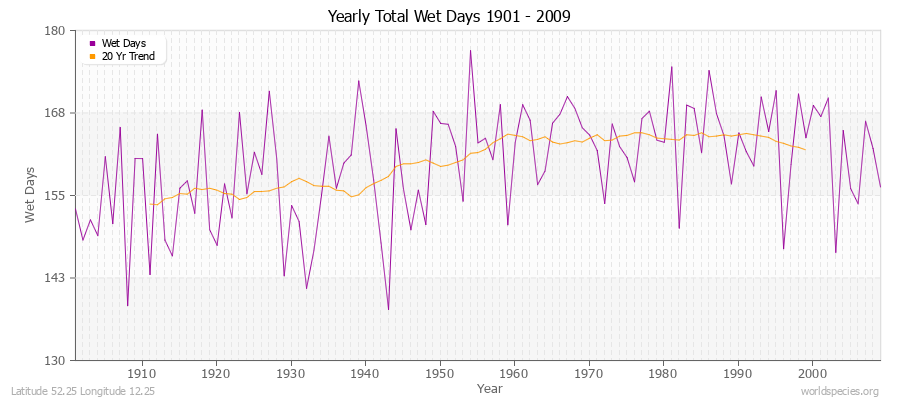
WetDays17.012.311.611.712.213.014.613.911.911.414.415.8109 years
Precipitationin1.41.21.21.51.92.42.32.31.71.41.51.6109 years
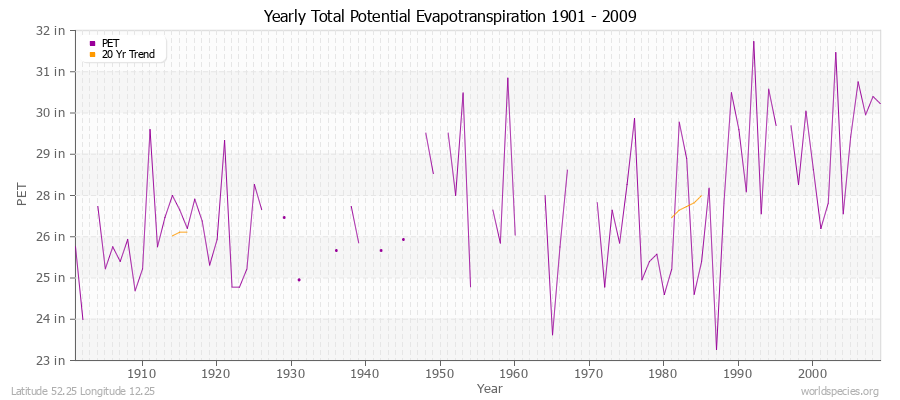
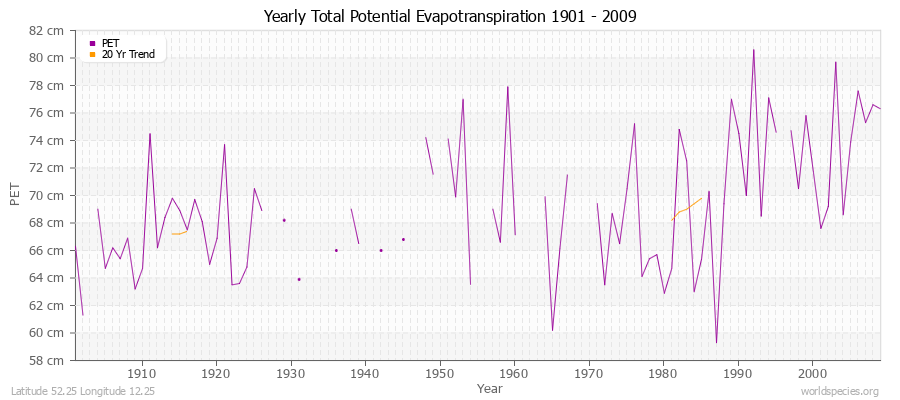
Potential Evapotranspirationin0.50.71.62.64.14.44.64.02.51.30.60.484 years
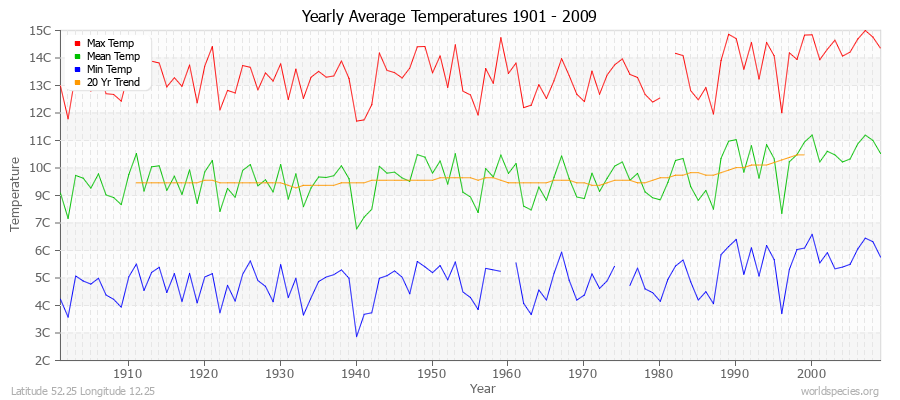
Yearly Average Temperatures 2010 - 2009 (English) Latitude 52.25 Longitude 12.25
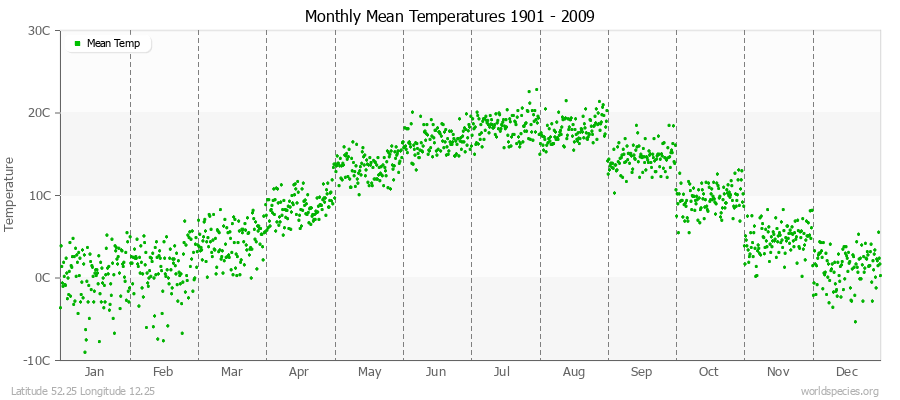
Monthly Mean Temperatures 1901 - 2009 (English) Latitude 52.25 Longitude 12.25
Yearly Total Frost Days 1902 - 2009 Latitude 52.25 Longitude 12.25
Yearly Total Precipitation 1901 - 2009 (English) Latitude 52.25 Longitude 12.25
Yearly Total Wet Days 1901 - 2009 Latitude 52.25 Longitude 12.25
Yearly Total Potential Evapotranspiration 1901 - 2009 (English) Latitude 52.25 Longitude 12.25

Climate data provided by CRU TS 3.1 - University of East Anglia Climate Research Unit (CRU). [Phil Jones, Ian Harris]. CRU Time Series (TS) high resolution gridded datasets, [Internet]. NCAS British Atmospheric Data Centre, 2008, Accessed: 28-July-2011
Charting software provided by pChart - a PHP class to build charts.
Köppen climate classification provided by Kottek, M., J. Grieser, C. Beck, B. Rudolf, and F. Rubel, 2006: World Map of Köppen-Geiger Climate Classification updated. Meteorol. Z., 15, 259-263
The calculation method for the potential evapotranspiration is the FAO grass reference equation (Ekstrom et al., 2007, which is based on Allen et al., 1994). It is a variant of the Penman Monteith method using TMP, TMN, TMX, VAP, CLD.